
SOI Used For a Microfluidics Mold
A PhD candidate requested help with a research project.
Reference #211268 for specs and pricing.
Test Grade Silicon Wafers to Build Molds
A postdoctoral researcher requested the following:
What 100mm silicon wafer spec should we use to build molds (using photolithography), that we then use to cast microfluidic devices?
Reference #46809 for specs and pricing.
Substrates to Fabricare Microfluidic Devices
The term "microfluidics" can be confusing, because it is used in a variety of ways.
Microfluidics is a technique used in experiments that require little or no sample to complete. The process uses fewer materials and requires less time than larger experiments, so the costs are much lower and the overall precision is higher. Because fewer samples are needed, it improves the accuracy of experiments and decreases the detection limit of a compound.
UniversityWafer, Inc. has the substrate to help with your microfluidic substrates. From glass to silicon we offer numerous wafers that you can buy online easily.
Get Your Quote FAST! Or, Buy Online and Start Researching Today!
Microfluidics Research Papers
Below are a small list of UniversityWafer's role in microfluidics research.
High-throughput gene expression analysis at the level of single proteins using a microfluidic turbidostat and automated cell tracking
"SU8 Photoresist were deposited on clean polished silicon wafers (University Wafer) using a spin coater. The wafers were then aligned to the mask and exposed using a mask."
Braess’s paradox and programmable behaviour in microfluidic networks
"A 4-inch silicon wafer (test grade, University Wafer, Boston, MA) was cleaned with acetone and isopropanol and dried with nitrogen gas."
Microfluidic technology for cellular analysis and molecular biotechnology
"The designed micro-patterns were then transferred to 3 nch silicon wafers (University Wafer) to form masters using a negative photoresist SU8 2025..."
Investigating blood flow and antibiotic dosing using traditional microfluidics and novel 3D printed devices
"...spin coated (Laurell Technologies, North Wales, PA) onto a 4” wafer (University Wafer, South Boston, MA) using the following program: 500 rpm for 15 seconds, 1000 rpm for 30 secon..."
Analysis of Flow-Based Microfluidic Gradient Generators for the Study of Bacterial Chemotaxis
"100 mm single sidepolished silicon wafers were purchased from University Wafer. Wafers were cleaned using a series of acetone, methanol, isopropanol, and deionized water rinses, ..."
An Integrated Array-based Microfluidic Device for Parallel Loop-Mediated Isothermal Amplification (LAMP)
Silicon wafers were used as a substrate in the photolithography process to define mold for the fabrication of the micro-wells. Different sizes of wafers are available, from 1 to 12 inches (2.5 to 30.5 cm). The 3-inch (7.6 cm) silicon wafer (University Wafer, MA, USA) was selected as it was suitable to fit the design of the device.
Micofluidic Chips to Study Bacteria
A Postdoc requested the following quote for our most popular item below.
Si Item#452 - 100mm P/B (100) 0-100 ohm-cm SSP 500um Test grade.
The researcher will use the wafer to manufacture microfluidic ship to study e. coli (non-pathogenic) bacteria.
Reference #261960 for more information.
PDMS Microfluidics
A PhD in Chemical Engineering requested the following quote:
What Substrates are Commonly used for Fabricating Mold on for the Application of PDMS Microfluidics.
We are looking for a silicon wafer (4") which we will use for fabricating mold on for the application of PDMS microfluidics.
Which one is the common for this application?
UniversityWafer, Inc. Repied:
For fabricating molds intended for casting Polydimethylsiloxane (PDMS) microfluidic devices, the most commonly used substrates are those that allow for high precision and compatibility with established microfabrication techniques. Here are the widely used substrates:
Silicon Wafers: Usage: Predominantly used due to their compatibility with a wide range of microfabrication techniques such as photolithography. Advantages: High precision, smooth surface finish, and dimensional stability.
Glass: Usage: Utilized for creating high-precision molds, especially when features with high aspect ratios are required. Advantages: Chemically stable, smooth surface finish, and can maintain fine details well.
Photopolymers:
SU-8:
- Usage: Widely used as a negative photoresist material in the lithographic process to create molds with high aspect ratios.
- Advantages: Can create fine features and high aspect ratio structures, relatively inexpensive.
3D Printed Materials:
Resins:
- Usage: Employed in high-resolution 3D printing technologies for rapid prototyping of microfluidic molds.
- Advantages: Allows for quick turnaround time in prototyping, with a reasonable level of detail.
In selecting a substrate for creating a master mold for PDMS microfluidic devices, it is critical to consider the necessary feature sizes and aspect ratios, the available fabrication technologies, and the required surface finish of the mold to ensure the production of high-quality PDMS microfluidic devices. Generally, silicon wafers and SU-8 photopolymers remain the popular choices due to their precision and compatibility with lithography-based fabrication processes.
Reference RFQ #224281 for specs and pricing.
Related Microfluidics Substrate Resources
- Silicon wafers for microfluidics research
- 100mm silicon wafers for microfluidic devices
- 4 inch silicon wafers for master mold fabrication
- SOI wafers for microfluidics and MEMS
- Glass wafers for microfluidic chips
- PDMS for microfluidic device fabrication
- SU-8 photoresist for microfluidic molds
- Epi wafers for etched microfluidic structures
- P-type silicon wafers for microfluidic fabrication
- CMP polishing for silicon wafers
75mm Silicon Wafers to Fabricate Microfluidic Devices
A graduate student requested the follownig quote:
I’m currently working on a budget for microfluidic device which uses 75mm silicon wafers. I’m not sure of what perimeters would be needed for those.
UniversityWafer's Engineer replied:
If you are doing micro-fluidic devices then presumably you etch in silicon wafers various channels, membranes, orifices, cantilevers, etc. The properties of the required wafers depend on the etching process used.
Here are some parameters that you should consider and specify:
- Standard wafer diameter is 76.2±0.5mm - If you must have 75mm diameter then specify diameter and tolerance.
- Specify wafer thickness - 380±25µm is standard
- Specify Silicon dopant and resistivity - If you specify that the wafers be "undoped" that implies that they are of very high purity and resistivity (Resistivity is a measure of purity - the higher the resistivity, the purer the silicon, the higher the cost) - so do not do that. Generally, you should specify Resistivity as (1-100)Ohmcm. If your etching process depends on electro-chemical properties of the Silicon then you need to specify Boron doped Silicon (p-type) or Phosphorus doped Silicon (n-type). If your etching process is not sensitive to Silicon conductivity type then state "Doping immaterial" rather than "Undoped".
- If you use an etching process which depends on p-type to n-type transition as the etch stop, then you may want to specify Silicon Epi wafers where the substrate is p-type and the Epi layer is n-type (or vice-versa). Epi layer can be anywhere form 5 to 150µm thick.
- If you use anisotropic etch (as is most common) then you need to specify Crystallographic orientation of the silicon wafer surface - (100) orientation is most commonly used, but you may need (110) orientation wafers for etching deep trenches with perpendicular walls.
- Generally Single-side polished wafers are adequate (but double-side-polished wafers are also available, if you intend to use both sides of the Silicon wafer). Surface roughness is normally about 1nm on rms basis. This is a result of the CMP polishing process used and is not measured so you should not attempt to specify it. Total Thickness Variation (TTV) relates to how well one can focus on the wafers and so how fine details you can etch. TTV<10µm is standard, TTV<5µm is extra quality, TTV<1µm is possible but very expensive. TTV relates to wafer thickness and presupposes that the wafer is used clamped to a flat reference surface (as is normal). If wafer is used "free-standing", so it rests on a flat reference surface touching it at just 3 points, then Bow and Warp parameters are significant. For 3"Ø wafers Warp<30µm is standard (Bow is generally half of Warp although they are normally specified as the same, for example Bow/Warp<30µm), anything less incurs extra cost.
- Silicon is normally crystallized by the CZ process. This results in dissolved Oxygen content of about 20ppma. Some etch processes are sensitive to Oxygen content. In that case you may consider usingFZ crystallized Silicon with dissolved Oxygen < 1ppma, but FZ Silicon is more expensive.
There are many other things that one can specify about Silicon wafers, but for MEMS and micro-fluidics above are probably most significant.
Reference #221915 for specs and pricing.
Silicon Substrates Used to Study Extracellular Vesicles
A medical student requested help with the following:
Quantity and Specs
447 (76.2mm test grade)
452 (100mm test grade)
I’ll be using the wafers for a number of microfabrication applications, mostly microfluidic devices to study extracellular vesicles.
100mm Silicon Wafers to Fabricate Master Molds
A biomedical PhD candidate requested a quote for the following:
I'm looking at 100 mm Si wafers (Prime grade, ID 809) for use in microfluidic master mold fabrication. It should be sent to you in the next couple of days.
I wish to purchase a number of Si wafers. I was wondering if your business accepts purchase orders?
Reference #M5G 1M1 for specs and pricing.
Substrates are Used to Fabricate Microfluidic Master Molds
Microfluidic master molds are generally fabricated using a variety of substrates to suit different applications and manufacturing techniques. Here, I outline some of the common substrates used:
-
Silicon: Traditionally, silicon wafers have been a popular choice for fabricating microfluidic master molds. Silicon wafers offer high precision and are compatible with established microfabrication techniques such as photolithography.
-
Glass: Glass is another common substrate used in the fabrication of microfluidic master molds. Similar to silicon, it offers high precision and is compatible with various microfabrication techniques.
-
Photopolymers:
- SU-8: A commonly used negative photoresist material, SU-8 is popular for its ability to create molds with high aspect ratios and fine features.
-
Polymethyl Methacrylate (PMMA): PMMA is often used due to its transparency and ease of machining, enabling the creation of molds with complex geometries.
-
Polydimethylsiloxane (PDMS): Although PDMS is more frequently used as a material to create microfluidic devices from a master mold, it can also be used to create master molds themselves, particularly in rapid prototyping and in educational settings due to its low cost and ease of use.
-
Metals: In some cases, metal molds can be used, created using techniques such as micromilling or electroforming. These can offer high durability and precision.
-
3D Printed Materials:
- Resins: With the advent of high-resolution 3D printing technologies, resins are becoming increasingly popular for rapid prototyping of microfluidic molds.
- Polylactic Acid (PLA): Another material commonly used in 3D printing, which can be used for creating molds, especially in early-stage prototyping.
-
Plastics: Various plastics can be used, especially in combination with CNC machining, to create molds with relatively large features or for rapid prototyping purposes.
-
Agar and Gelatin: In biological applications, agar and gelatin can be used to create temporary molds for microfluidic devices.
-
Ceramics: In some specialized applications, ceramics might be used as a substrate due to their chemical stability and mechanical strength.
When choosing a substrate for a microfluidic master mold, considerations will generally include the required feature sizes and aspect ratios, the fabrication techniques available, and the intended application of the microfluidic device. It is always a good practice to choose a substrate that is most compatible with the intended downstream applications and the fabrication facility’s capabilities.
What Is Microfluidics?
Microfluidics is a technique used in experiments that require little or no sample to complete. The process uses 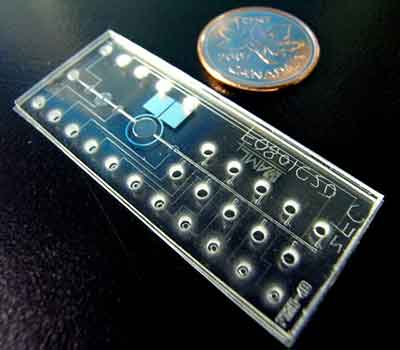 fewer materials and requires less time than larger experiments, so the costs are much lower and the overall precision is higher. Because fewer samples are needed, it improves the accuracy of experiments and decreases the detection limit of a compound. Read on to learn more. But first, let's define what is microfluidics.
Materials used in Microfluidics
Thermoplastic polymers (TPE) are highly cross-linked plastics that exhibit high mechanical strength. The material is rigid and has poor elasticity. It is also insoluble in certain solvents and is hydrophobic. TPE valves are often made of this material. The fabrication of TPE valves is similar to that of PDMS valves. These materials are ideal for microfluidic applications because of their excellent mechanical and thermal stability.
One of the most common materials used in microfluidics is PDMS, which is inexpensive and easy to implement. PDMS microstructures are fabricated on molds using photolithography or conventional machining processes. Multiple layers of PDMS are stacked to produce complex microfluidic designs. PDMS is also a great choice for prototyping. It is ideal for a variety of applications, including microfluidics for medical applications.
Laminar Glow
A fundamental principle of microfluidics is laminar flow, which is characterized by a single channel containing one or more layers of fluid. This property allows the flow in a microfluidic device to enter from the right, travel through the device and exit in the same direction. The flow rate ratio of the two phases determines the laminarity of the flow.
Microfluidics Surface Tension
There is a growing body of knowledge on the role of surface tension in microfluidics. Surfactants are widely used in microfluidics as a means of stabilising emulsions, but their role in the generation of micro-droplets and bubbles remains poorly understood. In addition, the increased knowledge on surfactants will spur the development of surface rheology at a nanoscale, which will allow measurements of surface properties with unprecedented resolving power. To that end, this training course will present the fundamentals of the interdisciplinary field of microfluidics and surface rheology.
What is PDMS for Microfluidics?
What is PDMS for microfluidic devices? Using this material to create a microfluidic device can greatly improve research and development efforts. The material's transparency, coupled with a variety of permeability and biocompatibility properties, make it a great choice for microfluidic applications. It can also be used in a variety of applications for which it can be useful, such as microheaters and sensors.
What is Closed Channel Microfluidics?
Closed channel microfluidics is a technique for liquid manipulation in a microchannel. This method uses
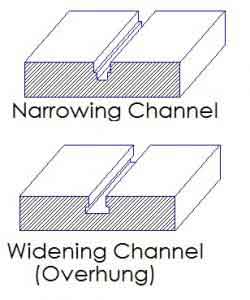 positive displacement pumps, such as syringe pumps, to drive fluid through the microchannels. Fluid velocity at the walls of the microchannels must be zero to produce a parabolic velocity profile. This flow allows manipulation of the culture system. The advantages of closed channel microfluidics are many, and these technologies have wide-ranging applications in biology, chemistry, and diagnostics.
Research Clients have Used the Following Wafer for Their Research: Under Oil Open-Channel Microfluidics Empowered by Exclusive Liquid Repllency
Si Item #1116 - Buy Online!
100mm P/B (100) 10-20 ohm-cm SSP 500um Prime Grade
High degree of Fluidic Control
In confined open channels, high fluidic control is possible with the use of novel open structures. This is analogous to digital microelectronics where discrete unit-volume droplets are manipulated on a substrate using electrowetting. Nonetheless, the range of fluidic operations is limited. Active control can be beneficial as it facilitates more complex fluidic handling and allows for smaller spatial footprints.
Biphasic Applications
Microfluidic chips with biphasic applications enable multiple functions to be integrated on the same platform. This approach allows the integration of different processes like cell injection, culture, lysis, separation, and detection. There are many options for the material used in microfluidic chips, but the most popular is polydimethylsiloxane, a high-molecular-weight organic silicon compound. This polymerized silicon compound has several advantages but has many limitations in microfluidics.
What are Advantages of Open Channel Microfluidics?
The advantages of open channel microfluidics are numerous. Its high flow rates, low operating voltage requirement, ability to break surface tension, and applications are some of the key advantages. Read on to learn more about this fascinating technology. Listed below are the most important features of open channel microfluidics. Weigh the advantages of open channel microfluidics compared to other microfluidics techniques.
What are Some Open Channel Microfluidic Applications?
An open channel microfluidic device consists of a set of channels that are bonded together with an organic carrier phase. As the name implies, the fluidic devices are open, allowing direct access to the sample. The open design enables a streamlined process for large-scale screening experiments. Open microfluidic devices are a great way to eliminate the hassles and costs associated with manual processing, which can negatively impact assay time and sample loss.
Keywords:
- microfluidic channels
- microfluidic photoablation
- microfluidic applications
- microfluidic network
- capillary flow
- capillary systems
- tube fabrication
- capillary pressure
- microfluidic device
- open microchannel
- trapped bubbles
- channel patterns
- pcb wafers
- vessel outlet
- hydrostatic pressure